

Data Security Needs Structure, Ownership, and Responsibility
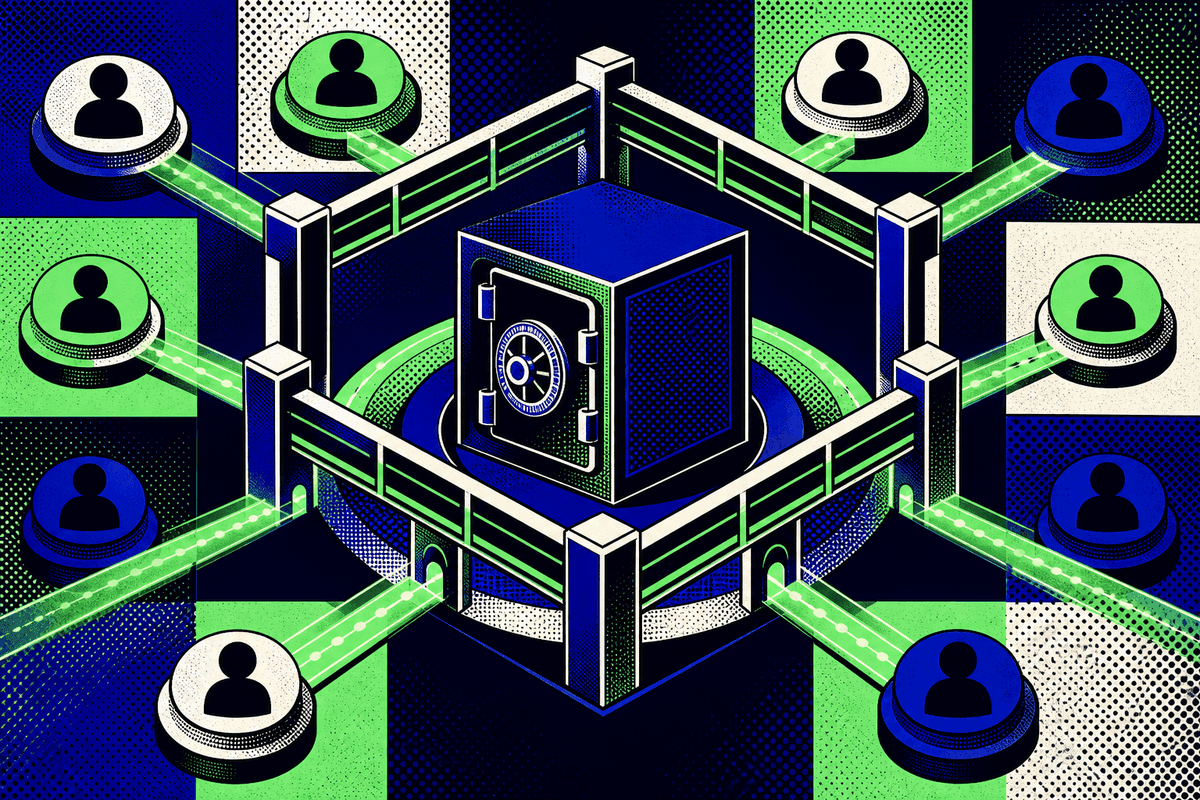
Data security cannot depend on vague ownership or unlimited access. It needs structure, clear accountability, limited access, and shared responsibility across business and technology teams.
Data Security & Compliance • 8 min read
Nobody walks into a bank vault by accident.
There are doors. Cameras. Locks. Roles. Approvals. Logs. People who can enter. People who cannot. People who can approve access. People who can only observe from outside.
The valuable thing is protected by structure.
Not by hope.
Not by a poster that says "security matters."
Not by assuming everyone will know what to do.
In the physical world, this feels obvious. Valuable things have boundaries. Cash, keys, documents, medicines, machinery, jewelry, confidential files. Access is limited because value creates risk.
But in the digital world, organizations often behave very differently.
Too many people can see too much.
Too many files move too freely.
Too many systems keep access long after the reason for access has disappeared.
Too many teams assume someone else is responsible.
That is where data security starts breaking down.
Not always with a dramatic breach.
Often with a quiet absence of structure.
1. The Problem Is Not Only Attackers
When people hear "data security," they often imagine an external attacker.
That risk is real. But it is not the only risk.
Data also becomes unsafe through ordinary business habits.
A folder is shared with a large group because it is faster.
A vendor receives more information than they need.
An employee changes roles, but their old access remains.
A former employee loses email access, but still exists in another system.
A sensitive report is downloaded, copied, and forwarded.
A team uses a personal drive because the approved system feels slow.
A dashboard exposes individual-level data when a summary would have been enough.
None of these moments may feel dramatic when they happen.
But together, they create an organization where valuable information is everywhere and ownership is nowhere.
That is not security.
That is luck.
And luck is not a control.
2. Data Cannot Be Protected If Nobody Owns It
The most dangerous sentence in data security is this:
"Everyone owns it."
It sounds collaborative. It sounds mature. It sounds like shared culture.
But if it remains vague, it usually means the opposite.
If everyone owns the data, who decides who should access it?
Who reviews permissions?
Who approves sharing with a vendor?
Who removes old access?
Who checks whether the data is still needed?
Who answers when something goes wrong?
Who has the authority to say no?
If those answers are unclear, ownership is not shared.
It is diluted.
And diluted ownership becomes invisible risk.
Data needs named ownership. Not because one person should do everything, but because every important data area needs someone who is accountable for how it is handled.
Customer data needs an owner.
Employee data needs an owner.
Financial data needs an owner.
Product data needs an owner.
Security logs need an owner.
Vendor data needs an owner.
Ownership turns "someone should fix this" into "this team knows what good looks like, who can access it, and what must happen when it changes."
3. The CISO Cannot Be the Sole Owner of Data Security
The CISO has a critical role.
But the CISO cannot be the only owner of the problem.
The CISO can build the framework, define guardrails, create policies, monitor risk, advise teams, implement controls, and make security visible.
But the CISO does not create every customer record.
The CISO does not maintain every HR file.
The CISO does not update every sales note.
The CISO does not decide every finance workflow.
The CISO does not know the business context behind every dataset.
That context lives inside functions.
HR knows which employee information is sensitive and who genuinely needs it.
Finance knows which records affect reporting, audit, and controls.
Sales knows which prospect and customer information is needed for pipeline motion.
Marketing knows which audience data supports campaigns and consent.
Technology knows how systems store, move, and expose information.
Leadership knows which data connects to business risk and direction.
Security can create the structure.
But business teams must carry ownership inside that structure.
Otherwise, security becomes a department people escalate to after decisions have already created risk.
4. Structure Is What Turns Good Intentions Into Behavior
Most people do not wake up wanting to mishandle data.
They are trying to finish work.
They need the file. They need the report. They need the export. They need the vendor to move fast. They need the dashboard before the meeting. They need the customer answer today.
If the secure path is unclear, slow, or painful, people create their own path.
That is why data security cannot depend only on awareness.
Awareness says, "Be careful."
Structure says, "Here is how we handle this."
Structure answers:
- What data is sensitive?
- Where should it live?
- Who can access it?
- How is access approved?
- How often is access reviewed?
- What can be shared externally?
- What must be masked or anonymized?
- What should never be uploaded to unapproved tools?
- Who is responsible when data moves?
- What happens when someone changes roles or leaves?
These questions turn security from a mood into a system.
The goal is not to slow everyone down.
The goal is to make careful handling normal enough that people do not have to invent decisions under pressure.
5. Limited Access Is Not Lack of Trust
Many access problems survive because people confuse restriction with mistrust.
"Why can't everyone see it?"
"We are all on the same team."
"It is easier if access is open."
But limited access is not an insult.
It is a sign that the data has value.
In the physical world, this is easy to understand. A company may trust its employees, but it still does not give every employee keys to the server room, bank account, legal archive, or CEO inbox.
Trust does not remove the need for boundaries.
Boundaries protect people as much as they protect assets.
They reduce accidental exposure.
They limit damage if an account is compromised.
They prevent people from carrying responsibility for data they do not need.
They make audits easier.
They make mistakes smaller.
The best access model is not "everyone gets everything."
It is "people get what they need to do their work well."
That one sentence is simple.
It is also one of the strongest principles in data security.
6. RACI Makes Responsibility Visible
This is where RACI matters.
RACI is a simple way to clarify roles:
- Responsible: the person or team doing the work.
- Accountable: the person who owns the outcome.
- Consulted: the people who should give input.
- Informed: the people who need to know what happened.
For data security, this matters because confusion is expensive.
Take customer data.
Sales may be responsible for entering and updating key customer context.
Customer success may be responsible for maintaining account health information.
Technology may be responsible for system access and integrations.
Security may be consulted on controls, risk, and approved handling.
Leadership may be accountable for the overall standard of customer trust.
Finance may be informed when data affects billing or reporting.
The exact model will vary by organization.
The important point is not that every company uses the same chart.
The point is that the chart exists.
Without it, responsibility becomes conversational.
With it, responsibility becomes visible.
7. Access Without Review Becomes Risk
Access is not a one-time decision.
It changes as the business changes.
People join.
People leave.
People move teams.
Projects end.
Vendors finish work.
Tools are replaced.
Data becomes more sensitive than it was before.
That is why access must be reviewed.
The permission that made sense in January may be unnecessary by June.
The vendor who needed data for implementation may not need it after go-live.
The employee who supported finance last quarter may now be in marketing.
The shared folder created for a short project may still be open to everyone involved.
Old access is one of the quietest risks because it feels normal.
Nothing appears broken.
But the circle of exposure keeps growing.
Security improves when organizations build a habit of asking:
- Who has access now?
- Who still needs it?
- Who no longer needs it?
- What can they do with it?
- Can they download it?
- Can they share it externally?
- Is the access temporary or permanent?
Review is not bureaucracy.
It is maintenance.
You do not install a lock once and assume it will serve every future situation forever.
8. Data Security Is a Business Discipline
The easiest mistake is to treat data security as a technical layer.
Tools matter. Controls matter. Monitoring matters. Identity systems matter. Encryption matters. Logs matter.
But tools cannot decide business context on their own.
A tool can show who accessed a file.
It cannot always know whether that access made sense.
A system can enforce a policy.
It cannot define every business exception.
A dashboard can show exposure.
It cannot create ownership where leadership has left it vague.
That is why data security has to be both technical and operational.
The business must know what data matters.
The business must know who needs it.
The business must know what happens if it leaks, changes, disappears, or becomes unreliable.
Technology and security can then build the controls around that reality.
When business and tech work separately, data security becomes either too loose or too painful.
Too loose, and risk spreads quietly.
Too painful, and people find workarounds.
The right answer is structure that understands the work.
9. The Afterthought Problem
Too often, data security enters late.
After the tool is purchased.
After the vendor is selected.
After the data is exported.
After the campaign is launched.
After the integration is live.
After access has already been given.
At that point, security becomes cleanup.
Cleanup is harder than design.
It is harder to remove access after people are used to having it.
It is harder to reorganize data after teams have built workflows around messy folders.
It is harder to enforce retention after years of unnecessary copies have spread.
It is harder to classify data after nobody knows where all the sensitive information lives.
The better approach is to ask security questions at the beginning.
What data will this use?
Where will it live?
Who owns it?
Who needs access?
What is the minimum access required?
What happens when the project ends?
What should be deleted, masked, or retained?
These questions are simple.
But asked early, they prevent expensive confusion later.
10. Shared Responsibility Does Not Mean Equal Responsibility
Everyone has a role in data security.
But not everyone has the same role.
This distinction matters.
An employee should handle data carefully, follow approved processes, report mistakes, and avoid unnecessary sharing.
A manager should make sure the team has the right access and understands the rules.
A data owner should define how a dataset should be used, protected, reviewed, and retired.
Technology should maintain systems, integrations, identity, and access controls.
Security should define frameworks, monitor risk, guide teams, and improve controls.
Leadership should make the standard visible and fund the work required to meet it.
Shared responsibility works only when responsibility is specific.
Otherwise it becomes a slogan.
And slogans do not remove access.
They do not classify data.
They do not review permissions.
They do not stop sensitive files from spreading.
Specific responsibility does.
11. Valuable Data Deserves Adult Supervision
The shift is simple.
Stop treating data like an afterthought.
Treat it like something valuable enough to deserve:
- Clear ownership.
- Limited access.
- Defined handling rules.
- Regular access review.
- Business and technology alignment.
- Security guardrails that people can actually follow.
- Accountability when data is created, moved, shared, changed, or retired.
This is not about creating fear.
Fear makes people hide mistakes.
This is about creating seriousness.
Seriousness makes people pause before oversharing. It makes teams ask who owns the dataset. It makes leaders ask whether access still makes sense. It makes technology teams build with context. It makes security practical instead of distant.
Data can become one of the biggest assets in an organization.
But only if the organization treats it like one.
If ownership is vague and access is loose, the same data becomes risk.
The difference is not the data itself.
The difference is the structure around it.
A bank vault is not secure because money is special.
It is secure because everyone agrees the money is special enough to protect.
Data now deserves the same seriousness.
Not someday.
Not after an incident.
Not after a regulator, customer, auditor, or board asks uncomfortable questions.
Now.
Because if data is valuable enough to run the business, it is valuable enough to protect with structure, ownership, and responsibility.
12. Why Ownership Cannot Stay Abstract
Sylox treats data security as an operating discipline, not only a technical control. The work touches AI-powered data security and compliance, RBAC/ABAC access control, automated compliance reporting, real-time threat detection, governance, data architecture, and enterprise systems. Those pieces only work when the business can answer simple questions clearly: what data matters, who owns it, who can access it, and what happens when that access should end.
IRIS was built for that practical gap between policy and reality. It helps organizations discover, classify, and secure shadow data across 105+ sources/connectors and 85+ sensitive data patterns, then connect that map to exposure, access, and compliance evidence. For security teams, the value is not just finding sensitive data. It is creating a defensible view of where it lives, who can reach it, and where responsibility needs to sit.
Dipal Panchal has seen what happens when ownership is vague at enterprise scale. At CBRE, he launched Global PULSE across 20,000+ properties in 70+ countries, saving 300,000+ hours and reducing digital total cost of ownership from $55M to $47.5M. At Vialto Partners, he built data governance across 50+ systems, 10M records a day, data quality, MDM, cataloging, access controls, and analytics. At Ameriprise, the environment included 2M+ accounts and $300B+ in client assets. That background is why his message is direct: the CISO can create the framework, but the organization has to carry the responsibility.
If your organization wants stronger data security, start by choosing one critical data area and answering five questions: who owns it, who can access it, who approves access, who reviews access, and what happens when that access is no longer needed?
Table of Contents

Let's Build
Something Exceptional
Have a project in mind? We're here to bring your vision to life. Get in touch and let's create impactful solutions together.
Schedule a ConsultationYour next favorite blog is just a click away!

AI-Powered Data Governance: From Compliance Burden to Competitive Advantage
October 2025

Breaking Down Data Silos: A Step-by-Step Enterprise Integration Strategy
November 2025

Real-Time Data Pipelines: Full Load vs Delta Load vs CDC Explained
November 2025