

Mapping Patient Data Across Fragmented Hospital Systems
Hospitals hold EHRs, diagnoses, ABHA-linked records, Aadhaar, billing, and insurance data across fragmented systems. Here is why agentless patient-data discovery matters before DPDP obligations tighten.
Healthcare Data Security • 10 min read
The most private room in a hospital may not be a room. It may be a forgotten export: a lab report copied into a department folder, a radiology PDF attached to a vendor ticket, a billing file carrying more clinical context than it should, an ABHA-linked record sitting in a workflow nobody has reviewed, an old spreadsheet created during a migration because the real system was too slow that week.
Hospitals don't have one data system. They have a living maze: EHRs, lab systems, radiology, billing, insurance, pharmacy, appointments, patient portals, connected devices, old databases, new cloud apps, vendor systems, department folders, and reports built because somebody needed one number quickly. Somewhere inside that maze sits the most sensitive data a person can give an organization: diagnoses, prescriptions, test results, medical history, ABHA-linked records, Aadhaar, billing details, insurance information, family context, and sometimes data about a person at the most vulnerable moment of their life.
So healthcare data security can't begin with a policy document. It has to begin with a map. The simple question is: can the hospital prove where patient data lives across its fragmented environment?
1. The Machine You Cannot Treat Like a Laptop
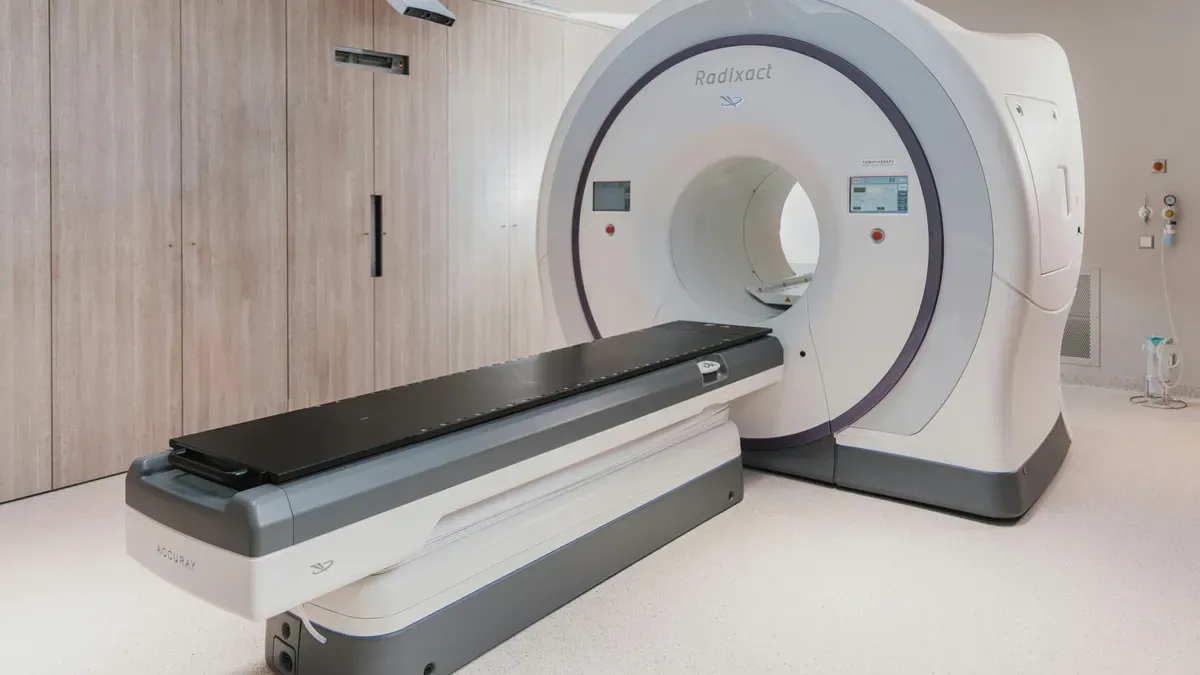
Healthcare is different from many industries because not every system can be treated like a normal enterprise application. You can install software on many servers, connect to many databases, and scan many cloud stores. But you can't casually install an agent on every clinical device, medical system, or operationally sensitive environment. A CT scanner is not a laptop. An infusion pump is not a marketing dashboard. A bedside monitor is not a shared drive. Clinical systems carry uptime, safety, certification, vendor, and operational constraints that most corporate IT environments never face.
That's what makes agentless discovery important. Hospitals need visibility without turning discovery itself into a new operational risk. The deployment model matters because hospital IT teams are already carrying too much. They're expected to support clinicians, keep systems running, help new digital programs go live, handle vendor dependencies, answer compliance questions, and respond when something breaks. A tool that demands a long installation plan across every clinical endpoint may never reach the starting line.
Agentless discovery changes the first step. It lets the hospital begin with visibility instead of deployment friction. That doesn't solve every problem, but it gives the team something concrete to work from: a first view of where sensitive patient data lives.
2. How Patient Data Escapes the Official Record
Patient data usually begins in a controlled workflow. A person registers. Identity details are collected. A doctor records a consultation. Tests are ordered. Lab results arrive. Radiology images and reports are created. Billing is generated. Insurance claims may be filed. Follow-up notes are added. If the hospital participates in ABDM-linked workflows, ABHA-linked patient context may enter the picture too.
Each step creates or moves data. The official record may sit in the EHR, but copies and fragments can appear everywhere:
- lab information systems
- radiology systems
- billing platforms
- insurance and TPA workflows
- appointment systems
- patient portals
- call-center tools
- clinical department folders
- doctor-created notes
- shared drives
- exported reports
- analytics warehouses
- vendor support tickets
- old migration folders
No one created this sprawl as a strategy. It's the natural byproduct of care delivery, administration, billing, insurance, and digitization moving at different speeds.
3. ABDM Makes Visibility More Important
India's healthcare digitization is moving forward through ABDM and ABHA-linked health records, and that's a good direction. Digital health can reduce friction, improve portability, and help patients move through the system with less repetition. But digitization also raises the need for visibility. The more systems connect, the more it matters to know where patient data sits and how it moves.
A hospital that can't see where patient records exist today will struggle to govern them tomorrow. If access is unclear before systems connect further, the exposure expands. If old exports and departmental files are ignored, the official system can look clean while the real risk sits elsewhere. The point isn't to slow digitization. The point is to make it safer.
That safety matters for clinicians too. Doctors and nurses shouldn't have to guess whether the data in front of them is the right version, the complete version, or a copy from an old workflow. Better visibility helps security teams, and it also supports the operational confidence that care environments depend on. Care depends on trusted operational context.
4. The ABHA Context Changes the Trust Equation
ABHA-linked records make the healthcare data conversation bigger than a single hospital visit. The promise is useful: a patient's health information can become more portable, connected, and easier to use across care journeys. The trust burden rises with it. Once health identity and clinical context connect across more workflows, a hospital's visibility problem becomes more consequential.
The patient may not understand the backend architecture. They may not know which system stores the record, which department exported it, which vendor supports it, or which repository holds an old copy. But they understand one thing clearly: they gave the hospital private health information because they needed care. So ABHA-linked data shouldn't be treated as another integration field. It sits close to identity, health history, and continuity of care. If hospitals digitize without visibility, the data becomes easier to move than to govern.
Good healthcare data security should support the direction of digital health, not fight it, and the way to do that is to make the data estate visible before it gets too connected to understand. The earlier this starts, the easier the change feels. A hospital that waits until every workflow is digitized has to untangle years of hidden copies. A hospital that maps patient data during the transition can shape cleaner habits while the operating model is still being built. That's how security becomes part of modernization instead of a cleanup project after it.
5. The Data Is Deeply Personal
Healthcare data carries a different weight. A bank account can be closed. A card can be replaced. A password can be reset. A diagnosis cannot be unseen. Once medical information escapes its context, it can affect dignity, employment, family relationships, insurance decisions, and personal safety.
So patient data protection shouldn't be treated as a compliance checkbox. It's a trust obligation. A person shares health information because they need care. They don't share it so it can be copied into unmanaged folders, exposed through stale access, or scattered across systems nobody can inventory. Hospitals already understand clinical responsibility. The next step is data responsibility.
6. DPDP and Healthcare
The DPDP Act and Rules raise the importance of personal data protection across sectors. For healthcare, the stakes are high because patient records can combine identity, health, billing, insurance, and family context. CERT-In's 6-hour cyber-incident reporting direction adds another layer for covered incidents. DPDP's full penalty regime and core obligations phase in on or around 13 May 2027. Healthcare organizations likely to be designated Significant Data Fiduciaries in the future should be especially careful not to treat data maps as one-time paperwork.
The regulatory details matter. But the operational truth is simpler: you can't respond well to a patient-data issue if you don't already know what patient data exists, where it sits, and who can access it. That knowledge has to be built before an incident.
7. Why Breach Scoping Is So Hard in Healthcare
When a healthcare incident happens, the hard question is rarely only "which system was affected?" The harder one is: which patients, which records, and which data types were in the blast radius?
If the affected system contains only appointment reminders, the response is different from one containing diagnosis notes, Aadhaar, billing details, insurance claims, or ABHA-linked records. If a shared folder holds old lab exports, the response is different from a folder with public brochures. If a vendor account could reach patient records, the response is different from one limited to technical logs. That's why a pre-built data map matters. During an incident, teams don't have time to discover the estate from zero. They need to start from an existing picture of sensitive data and access, then narrow the scope quickly.
8. The Access Problem in Hospitals
Healthcare access is complicated because care is collaborative. Doctors need information. Nurses need information. Lab teams, radiology teams, billing teams, and insurance desks all need information. TPAs and external partners may need information. Support teams may need enough context to resolve operational issues. The goal isn't to lock everyone out. The goal is to make access match purpose.
That's difficult when access drifts. A user keeps access after moving departments. A vendor account stays active after implementation. A report exposes more fields than a team needs. A shared folder keeps old patient files long after a project ends. A department builds a workaround spreadsheet because the main system is slow. A diagnostic export lands somewhere no one reviews. These are ordinary hospital realities, and they turn into security realities the moment no one has a current access picture.
9. The Device-Adjacent Blind Spot
The phrase "medical device data" can make the problem sound purely technical. In practice, the bigger risk is often device-adjacent data. The scanner, monitor, lab machine, or clinical system may not be where the governance team can start. But the reports, exports, images, PDFs, summaries, billing references, and support files around those systems often move into places the hospital can map.
A radiology report lands in an EHR. A lab result is exported for a specialist. A billing file includes clinical context. A vendor support ticket includes screenshots. A department folder holds old diagnostic exports. An analytics store contains patient identifiers tied to service lines, departments, or outcomes. That's why agentless discovery isn't only about avoiding disruption. It's about finding the data around clinical workflows where risk tends to accumulate. The hospital may not be able to treat every device like a normal endpoint, but it can still build visibility across the systems and repositories where patient data from those workflows travels.
10. Why Under-Resourced IT Needs Prioritization
Many hospitals don't have the luxury of large security teams. The same IT group may be responsible for uptime, user support, vendor coordination, digital-health rollout, compliance requests, helpdesk work, and emergency troubleshooting. Asking that team to manually inventory every sensitive data store isn't realistic.
That's why prioritization matters. The first question shouldn't be, "Can we fix everything?" It should be, "Where is the most sensitive patient data, and where is access the broadest?" That framing helps a stretched team focus. Start with patient identifiers, diagnosis data, ABHA-linked records, billing and insurance data, and repositories with broad access. Then look at old exports, shared folders, vendor tickets, and reporting layers. Then assign owners to the highest-risk stores first. This isn't glamorous work, but it's the work that turns healthcare data security from a giant fear into a sequence of decisions.
11. The Human Workflow Problem
Healthcare data isn't handled only by systems. It's handled by people under pressure. A doctor needs a report before a procedure. A nurse needs context during a shift. A billing team needs documents before discharge. A patient asks for a copy. A family member follows up. A vendor troubleshoots a system. A department head asks for a report. A compliance person needs evidence. Every request has urgency behind it.
That urgency is why workarounds appear. Someone exports a file because the system is slow. Someone shares a screenshot because the portal is down. Someone copies a report because a specialist needs it quickly. Someone keeps a folder because the same issue may come back. In healthcare, security can't be designed as if people have infinite time and perfect workflows. The safe path has to respect clinical and operational pressure, and that begins with understanding where patient data actually travels during real work, not where the policy says it should stay.
12. What Good Looks Like Before an Incident
A hospital doesn't need perfection before it improves. It needs a better starting position. Good looks like knowing which systems hold patient identifiers, diagnoses, billing details, insurance records, and ABHA-linked data. It looks like knowing which shared folders and old exports contain patient information. It looks like knowing which vendors and service accounts can access sensitive stores, and which departments own each high-risk repository. It looks like a CISO, DPO, IT head, and operations leader looking at the same data map instead of five separate assumptions.
That's how breach readiness becomes calmer. When something happens, the team isn't asking, "Where do we even start?" It starts from the map. The map doesn't make the incident easy. It makes the first hour less blind.
13. Why Discovery Alone Is Not Enough
A hospital needs to discover patient data first, but a useful map can't stop there. It should answer:
- What kind of sensitive data was found?
- Is it EHR data, diagnosis data, ABHA-linked data, Aadhaar, billing, insurance, or another category?
- Which systems and repositories contain it?
- Which departments own it?
- Which users, roles, vendors, and service accounts can access it?
- Which copies sit outside official clinical systems?
- Which stores should be reviewed first because the data is most sensitive or most exposed?
That's where discovery becomes posture. The hospital moves from "we have patient data" to "we know where it lives and who can reach it."
14. What IRIS Can Actually Help With
IRIS fits the healthcare use case because it's built around visibility without heavy deployment. Its verified capabilities include:
- 105+ data connectors
- 85+ sensitive-data patterns
- 99.9% Aadhaar detection accuracy using the Verhoeff checksum
- first report in 30 minutes
- agentless deployment
- zero customer data leaving the customer environment
For hospitals, these capabilities matter in practical ways. Agentless deployment matters because clinical systems and medical environments can't be treated like ordinary office software. The 105+ connectors matter because patient data spreads across EHR, lab, radiology, billing, insurance, portal, storage, and reporting systems. The 85+ patterns matter because healthcare records combine health, identity, billing, insurance, employee, and customer-like data. The 99.9% Aadhaar detection accuracy matters because Aadhaar shows up in registration, billing, insurance, and identity workflows. The 30-minute first report matters because many hospital IT teams are stretched and need a fast first view, not a long discovery project before the real work begins. Zero data leaving the environment matters because patient trust can't be protected by creating another place where patient data travels.
IRIS can also surface who can access sensitive patient data. It doesn't revoke permissions by itself. It doesn't file reports. It doesn't replace clinical, legal, or compliance judgment. It gives hospital teams the data map they need to act responsibly.
15. A Simple Healthcare Data Test
Pick one patient-data category. ABHA-linked records, Aadhaar, lab reports, or billing records are good starting points. Now ask:
- Which systems contain this data today?
- Which departments can access it?
- Which vendors or external partners can access it?
- Which reports or exports contain copies?
- Which old folders or migration stores still hold it?
- Which users have access because of historical workflow, not current need?
- Can the hospital scope affected patients quickly if a breach occurs?
- Can the hospital prove that scanning and classification happen without moving patient data out of the environment?
Clear answers mean the hospital has a foundation. Answers that require manual searching across departments mean the hospital has a visibility problem, and that problem deserves attention before mid-2027 pressure sharpens.
16. The Map Is Part of Care
Hospitals already know how to protect people in physical space. The data space now needs the same seriousness. That's why healthcare matters to Sylox. Our work sits where data becomes operational: security, compliance, data architecture, master data management, analytics, automation, ETL, enterprise applications, and cloud infrastructure. Across 35+ enterprise projects, 22+ AI and data solutions, and 9+ Fortune 500 enterprises served, the recurring pattern is clear: sensitive data becomes harder to protect when digitization moves faster than visibility.
IRIS was built for that gap. It discovers where sensitive data lives, classifies it across 105+ sources and connectors and 85+ sensitive-data patterns, and produces a first risk view in 30 minutes without customer data leaving the customer's environment. For healthcare organizations in India, that means EHRs, diagnoses, ABHA-linked records, Aadhaar, billing, insurance, employee, and patient data across the systems where care and administration actually meet.
Dipal Panchal has spent twenty years inside enterprise data environments at Time Warner, Ameriprise, CBRE, Amazon, and Vialto Partners. His work has touched $300B+ in client assets, $500B in real estate, 300M+ Amazon customers, 1B+ annual transactions, 50+ enterprise systems, and 10M records a day, with $66.95M+ in quantified savings or avoidance and 334,126+ annual hours saved.
At that scale, the lesson is direct: if the data map is weak, the control story is weak. For hospitals, the data map isn't only about compliance. It's about protecting trust at the moment people are least able to protect themselves.
If your hospital or healthcare network is digitizing fast, start with one question: can you find every place patient data lives without installing agents across clinical systems?
Table of Contents

Let's Build
Something Exceptional
Have a project in mind? We're here to bring your vision to life. Get in touch and let's create impactful solutions together.
Schedule a ConsultationYour next favorite blog is just a click away!

Building a Data-First Startup: Lessons from Our First 6 Months
October 2025

Protecting Data That Never Stays Still
April 2026

Cyber Resilience vs Cyber Defense: Why the Difference Matters
April 2026