

Practise What You Audit: DSPM for GRC Firms Holding Client Evidence
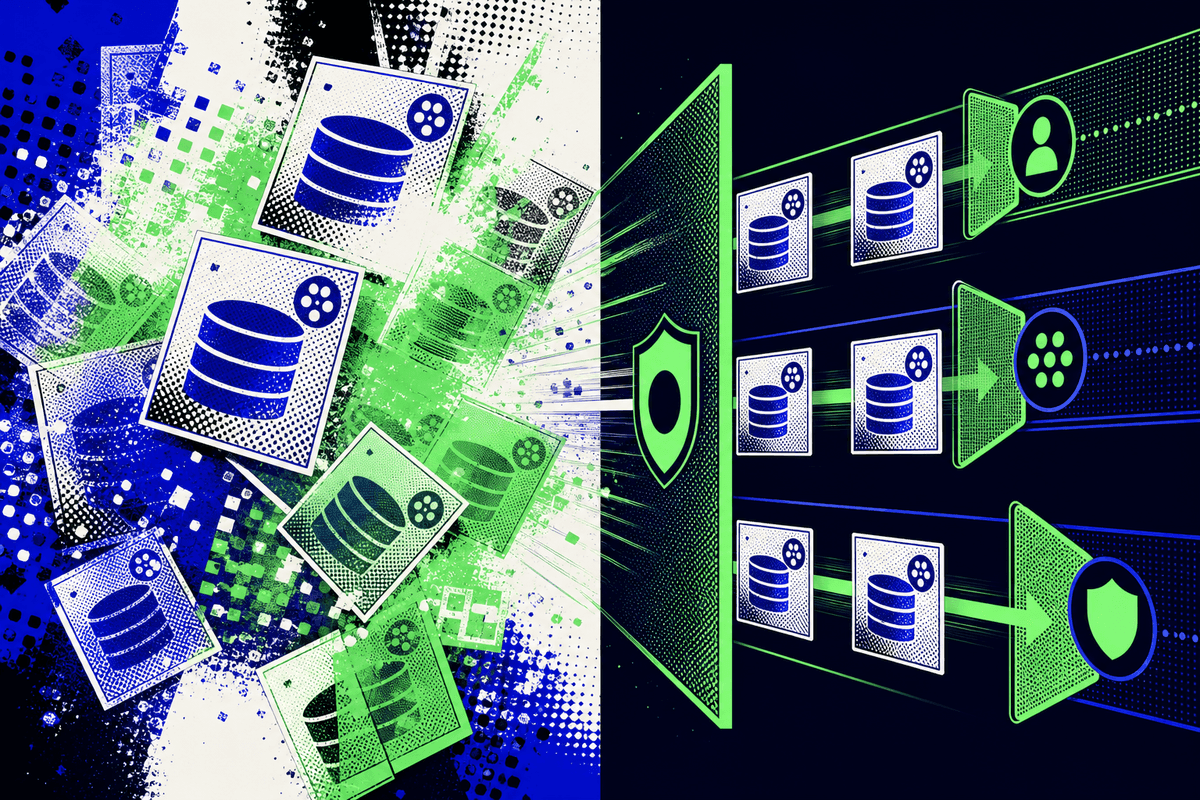
GRC and compliance firms hold some of their clients' most sensitive evidence. Here is why data discovery, zero-egress scanning, and access governance matter before DPDP scrutiny rises.
Data Security & Compliance • 9 min read
The most dangerous file in a GRC firm doesn't look dangerous. It shows up as an ordinary client attachment, no warning label, with a name like Q3_Control_Evidence_Final.xlsx, Vendor_Risk_Register_v8.xlsx, or DPDP_Readiness_Working_Copy.docx.
Someone downloads it because the client meeting starts in twelve minutes. Someone drops it into a shared folder so the partner can take a quick look. Someone pastes a screenshot into a ticket because the control owner has gone quiet. Someone keeps an old export around in case it's useful later. None of it feels like a breach, and that is the problem.
GRC firms spend their days asking everyone else the hard questions. Where is your sensitive data? Who can access it? What evidence proves the control is working? Which vendors touch regulated information? What would you show a regulator if something broke tomorrow? Underneath all of those sits a sharper one: can the GRC firm survive the same audit of its own client evidence?
Client evidence isn't admin clutter. It's a map of a company's risk posture, with weak controls, vendor dependencies, system names, employee details, financial processes, and security gaps all in one place. Put that map in the wrong hands and it becomes a route to everything the client is trying to protect.
1. The File That Should Keep a Partner Awake
Picture a mid-sized GRC or compliance consulting firm running ten active engagements. One client is preparing for DPDP. Another is answering an enterprise customer's security questionnaire. A third is mapping RBI, IRDAI, or SEBI-linked controls. A fourth is proving readiness to a global buyer asking GDPR questions. A fifth is collecting vendor assessment evidence before a board review.
Every engagement generates evidence: control documents, risk registers, audit trails, screenshots from internal tools, access lists, vendor security reviews, data-flow diagrams, policy exceptions, incident records, and employee details. Sometimes client PII. Sometimes financial data. Sometimes security information that would be painful to expose because it shows exactly where the client is weak.
The evidence starts in one place, and then reality takes over. A partner asks for a copy by email. A consultant downloads a spreadsheet to clean it up. A client uploads screenshots into a shared drive. A project manager tracks tasks in a ticketing tool. A junior analyst spins up a per-client tracker. A reviewer asks for one week of folder access and still has it six months later.
Nobody sets out to create a data-security problem. They're trying to get the audit done. But after enough engagements, the firm can lose its answer to the most basic question of all: where does each client's sensitive evidence actually live? That is the GRC data problem.
2. The Evidence Is More Dangerous Than It Looks
Read a risk register like an attacker and it stops being boring. It shows which systems are critical, which controls are failing, which vendors are weak, which owners are behind, and which risks leadership has quietly accepted for now. A control screenshot can give away internal system names, user roles, access policies, data stores, admin interfaces, and account structures. A vendor assessment exposes the third parties a client depends on, what they process, and where they fall short. A compliance spreadsheet carries names, emails, departments, ticket IDs, security exceptions, and timelines.
None of this has to reach the dark web to hurt the client. It only has to reach the wrong person: a former contractor, a careless shared folder, a tool nobody locked down.
For a GRC firm, the reputational damage cuts deeper than it would elsewhere. A retail platform can recover from a security miss if customers still see value in the product. A bank can absorb a regulatory finding because it has capital and institutional weight. A GRC firm sells trust. Mishandle the evidence a client handed over for governance work, and the damage lands on the core promise of the business. The client doesn't think "a file was misplaced." The client thinks, "You told us how to govern data, and you couldn't govern ours."
That's why the bar has to be higher.
3. The Folder Was Never the Boundary
The first instinct is to say, "We already have folders." That holds up until someone maps the estate honestly.
Client evidence sits in SharePoint, Google Drive, email attachments, Teams, Slack exports, Jira, ServiceNow, local desktops, data rooms, Notion pages, CRM notes, onboarding forms, and per-client spreadsheets. Some of it is structured, some isn't. Some is current, some belongs to projects that closed last year. Some should be retained, some should have been archived months ago, and some should never have been copied in the first place.
The issue isn't that GRC firms don't care. Most do. Compliance work creates data in motion, and data in motion rarely stays inside the neat box drawn at kickoff. Every new client adds a variation. Every new framework adds an evidence type. Every new reviewer adds an access path. Every new tool adds another place sensitive material can land. Before long the firm isn't running one client-data environment, it's running dozens of small evidence estates.
That's the point where spreadsheet tracking falls apart. A spreadsheet records where the team thinks evidence lives. It can't prove where the evidence actually sits today, while everything keeps moving.
4. The DPDP Angle for GRC Firms
GRC firms aren't usually the headline in DPDP conversations, which is part of why they should pay attention.
Their clients are banks, insurers, healthcare providers, fintech platforms, HR platforms, SaaS companies, and multinationals, and each one drags its own regulatory pressure into the engagement: DPDP, CERT-In reporting, RBI, IRDAI, SEBI, GDPR, HIPAA, or contractual obligations to customers. The firm may not own the client's data as a primary business dataset, but it still holds copies of evidence packed with personal data, financial context, and security detail. So the firm becomes a custodian of sensitive client evidence across many sectors at once.
Client expectations are rising to meet that. Enterprise buyers increasingly ask their vendors and advisors to prove their own security posture. "We help with governance" no longer covers it. The firm has to show how it handles client material, who can access it, how long it keeps it, and whether sensitive evidence ever leaves controlled environments. The firm's own data posture becomes part of the sale, and what closes the deal is evidence, not marketing language.
5. The Question Every GRC Firm Should Be Able to Answer
Take one active client and ask:
- Where are all the files containing that client's sensitive evidence?
- Which repositories hold the client's PII, financial data, or security details?
- Which employees, contractors, reviewers, and service accounts can open those files?
- Which former project members still have standing access?
- Which copies sit outside the official engagement folder?
- Which evidence should be retained, and which should be removed?
- If the client asked tomorrow, could the firm show a defensible map?
That last word is the one that matters. A defensible answer isn't a hunch, and it isn't a guess about where the team usually keeps things or a promise to go ask the engagement manager. It means the firm can point to where the data lives, what kind of sensitive data it holds, who can reach it, and what has changed over time. That is the operational heart of DSPM for a GRC firm.
6. Why Access Is the Real Risk
Finding sensitive evidence is step one. Seeing who can open it is step two, and in a lot of GRC firms, step two is where the uncomfortable part shows up.
Access tends to follow convenience. A senior reviewer gets broad access because the review is urgent. A consultant gets added to a folder because the client changed scope. A partner gets access across every client because they own the relationship. A contractor gets a link during fieldwork. A shared service account gets used because the tool was never built for granular permissions. Each call makes sense on its own. Stacked together, they add up to overexposure.
The danger isn't only the malicious insider. Most of it is ordinary drift. Someone changes teams. Someone leaves the firm but stays on a client folder. Someone downloads a spreadsheet to finish faster, or forwards a control document to a personal inbox before a deadline. No single moment looks like a breach, yet the access picture keeps getting wider, older, and harder to explain.
For a GRC firm, least privilege can't stay theoretical. It has to be visible. The firm needs to know who can reach client evidence before the client, the auditor, the regulator, or an incident forces the question.
7. What IRIS Can Actually Help With
IRIS fits this use case because the first problem is visibility. GRC firms need to find where sensitive client evidence has spread, across engagement repositories, shared drives, collaboration tools, ticketing systems, and per-client working files.
IRIS is built around six verified capabilities:
- 105+ data connectors
- 85+ sensitive-data patterns
- 99.9% Aadhaar detection accuracy using the Verhoeff checksum
- first report in 30 minutes
- agentless deployment
- zero customer data leaving the customer environment
For a GRC firm, those claims translate into plain terms. Agentless deployment matters because client evidence is scattered across many repositories, and a heavy rollout slows down a services business that bills by the hour. The 105+ connectors matter because evidence almost never lives in one clean system. The 85+ patterns matter because client files mix identity, financial, employee, health, vendor, and security information in messy formats. Zero data leaving the environment matters because a GRC firm can't afford to open a new exposure path while it's trying to map the existing risk. The 30-minute first report matters because nobody needs a six-month transformation program to understand a single client's evidence estate.
Access governance matters most of all, because discovery on its own doesn't answer the painful question: who can open this file right now? IRIS surfaces that access picture and shows where sensitive evidence lives and who can reach it. The firm still owns the decisions. The firm revokes access, updates retention, changes the process, and talks to the client. IRIS draws the map, and the firm acts on it.
8. What Clients Will Ask Next
The next wave of client questions won't stop at "Do you have a security policy?" Clients will ask how the firm handles evidence once it leaves their systems: which tools store it, which consultants can reach it, whether old engagement folders ever get reviewed, and whether sensitive evidence is scanned without spawning yet another external copy.
That's a different level of proof. Saying the firm follows good governance practice isn't enough. The firm should be able to show its own evidence-handling posture with the same seriousness it expects from clients. This gets sharper when the client is regulated. A bank, insurer, healthcare provider, fintech, or global enterprise doesn't only share documents, it shares traces of its controls, risks, systems, vendors, and weaknesses. If those traces are scattered across engagement workspaces, the GRC firm becomes part of the client's data-risk surface.
That doesn't make GRC work impossible. It means the operating model has to grow up. Every client evidence repository needs an owner. Every old access path needs a review. Every sensitive data type needs classification. Every partner or contractor needs a clear purpose. Every retained file needs a reason. The firms that can prove all of this will sound different in a sales conversation. Instead of "trust us," they can say, "here is how we protect the evidence you trust us with."
9. The Partner Angle
There's another reason GRC firms are interesting for IRIS: they aren't only potential customers, they can also become partners.
A GRC firm that runs IRIS internally gets two wins at once. It cleans up its own evidence handling, and it carries a sharper, more practical data-discovery story to clients. Most clients don't need another abstract DPDP checklist. They need to know where sensitive data lives, who has access to it, and what evidence they can produce when the board, the auditor, a customer, or a regulator asks. That's where a GRC firm can extend its advisory work from policy into data reality.
The firm gets to say: "We don't only ask you to produce a data map. We use one ourselves." That line carries weight. It turns the relationship from advice into proof.
10. A Simple Internal Test for GRC Leaders
Before selling any new governance program, a GRC firm can run a quick internal test. Pick three client engagements: one active, one recently closed, and one older engagement that still has retained evidence. For each, ask:
- Where is the client's sensitive evidence stored?
- Which files contain personal, financial, security, or vendor-risk data?
- Who can access those files today?
- Who shouldn't have access anymore?
- Which copies live outside the official repository?
- What would you show the client if they asked about your evidence-handling posture?
Clear answers mean the firm has control. Answers that lean on memory mean the firm has a gap. That gap isn't embarrassing, it's normal. But normal isn't the same as acceptable, especially for a firm whose business is governance.
11. The Awkward Standard We Believe In
The best GRC firms should be willing to be inspected by their own advice. That's the standard Sylox cares about. Our work sits where data becomes operational: security, compliance, data architecture, master data management, analytics, automation, ETL, enterprise applications, and cloud infrastructure. Across 35+ enterprise projects, 22+ AI and data solutions, and 9+ Fortune 500 enterprises served, the pattern is painfully consistent. Governance fails when evidence is scattered, ownership is vague, and access is assumed instead of proven.
IRIS was built for that uncomfortable middle ground between policy and reality. It discovers where sensitive evidence lives across 105+ sources and connectors, classifies it against 85+ sensitive-data patterns, and produces a first risk view in 30 minutes without customer data leaving the customer's environment. For India, that also means catching the patterns global tools tend to miss: Aadhaar, PAN, GSTIN, UPI, ABHA, bank, health, employee, and customer data.
Dipal Panchal's background matters here, because this isn't small-scale admin cleanup. He has spent twenty years inside enterprise data environments at Time Warner, Ameriprise, CBRE, Amazon, and Vialto Partners, working across $300B+ in client assets, $500B in real estate, 300M+ Amazon customers, 1B+ annual transactions, 50+ enterprise systems, and 10M records a day, with $66.95M+ in quantified savings or avoidance and 334,126+ annual hours saved across that work.
The lesson is simple enough to sting: if you sell governance, your own evidence handling is part of the product. Clients don't only buy advice. They buy proof that the advisor lives by the same discipline.
If your GRC or compliance firm holds sensitive client evidence across engagements, start with one question: can you prove where that evidence lives and who can access it today?
Table of Contents

Let's Build
Something Exceptional
Have a project in mind? We're here to bring your vision to life. Get in touch and let's create impactful solutions together.
Schedule a ConsultationYour next favorite blog is just a click away!

AI Has a Data Problem Before It Has an Intelligence Problem
June 2026
Data Security Needs Structure, Ownership, and Responsibility
June 2026

Agentic AI for Enterprise Analytics: The Future of Intelligent Decision-Making
November 2025