

Mapping Employee Aadhaar Across Multi-Tenant HR Platforms
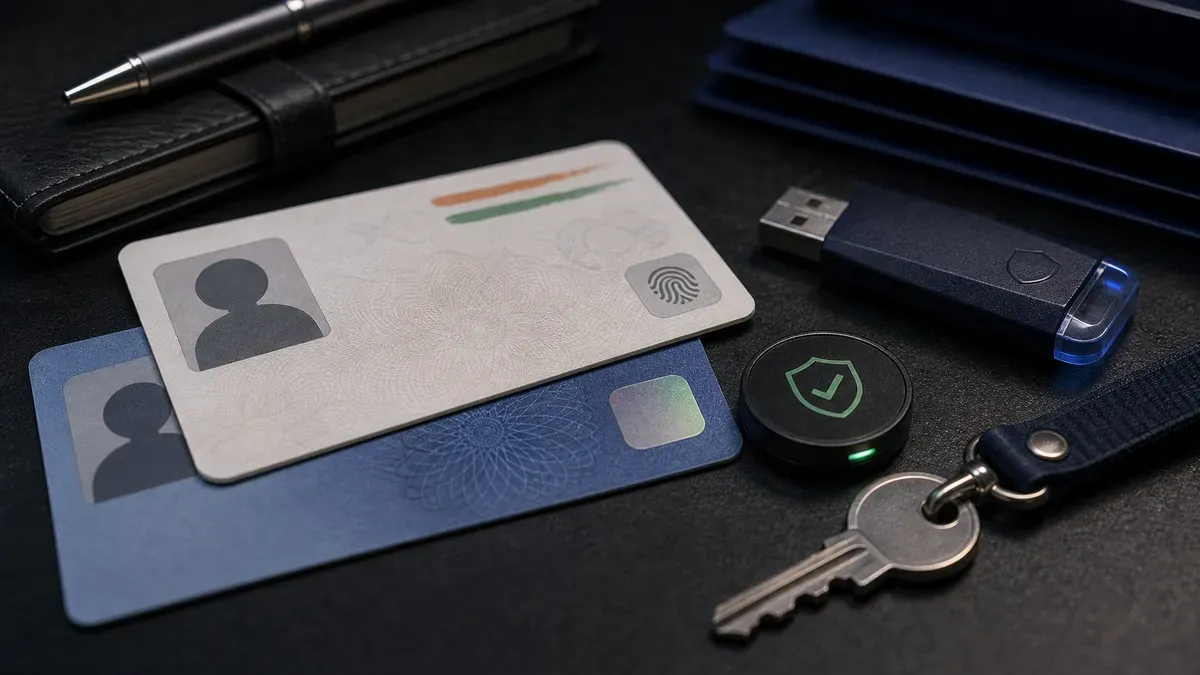
HR tech platforms hold Aadhaar, PAN, payroll, bank, performance, and benefits data across client tenants. Here is why discovery, classification, and access visibility matter before DPDP obligations tighten.
Data Security & Compliance • 8 min read
Nobody calls payroll software a vault, but that's what it is.
An HR tech platform doesn't hold "employee records" in the abstract. It holds the facts people would hate to see surface in a WhatsApp group, a loose spreadsheet, or a support ticket with the wrong access: Aadhaar and PAN numbers, bank account details, salary data, tax declarations, performance reviews, background checks, biometric attendance, health insurance, dependents' details, and sometimes children's data. And it isn't holding all of this for one company. It holds it for every client employer that trusts it.
That's the strange double life of HR tech. On the surface, the product sells clean workflows: hiring, onboarding, payroll, attendance, benefits, appraisals. Underneath, it becomes a multi-tenant archive of working lives. The use case is brutally simple: can the platform prove where employee identity and payroll data lives, and who can reach it across tenants?
1. The Vault Nobody Calls a Vault
Imagine a growing HR tech company serving 300 client employers. One client uses the platform for recruitment and onboarding, another for payroll, a third for attendance and leave, a fourth for performance management, a fifth for benefits and health insurance.
Each client brings its own workforce data, and each workforce comes with identity records: Aadhaar, PAN, bank details, salary information, offer letters, addresses, emergency contacts, performance notes, and benefits data. Some of it belongs to active employees, some to candidates, some to ex-employees, some to dependents, some to contractors. Some lives in production, some in reports. Some moves into support tickets when a payroll issue is raised. Some gets copied into CSV exports because a client wants a quick reconciliation.
The platform can look multi-tenant and tidy. The working reality is messier, because the data doesn't stay inside the clean product database. It lands in:
- HRIS modules
- ATS records
- payroll processing tables
- background-check workflows
- biometric attendance systems
- benefits and insurance exports
- reporting dashboards
- support tickets
- implementation trackers
- client-specific spreadsheets
- integration logs
- data warehouses
- internal QA environments
That isn't a failure of intent. It's what happens when HR operations turn into software.
2. The Dual Role Problem
HR tech companies carry a particular DPDP problem, because they often play two roles at once. For client employers, the company acts as a processor, handling workforce data on someone else's behalf. For its own staff, the same company is a data fiduciary, deciding why and how its own workforce data gets processed.
That sounds like a legal distinction, but it turns operational fast. Client data and internal employee data may sit in different systems, yet the people and processes around them overlap. The same support team helps client HR teams resolve employee record issues. The same implementation team moves client data during onboarding. The same product team uses masked or sample datasets for testing. The same analytics team builds usage and payroll reports. The same integrations connect to attendance, payroll, banking, tax, insurance, and benefits systems.
So the company has to answer two sets of questions. For its clients:
- Where does each client's employee data live?
- Which employees and integrations can access each tenant's records?
- Can we prove customer data isn't leaving the environment unnecessarily?
- Can we answer enterprise buyer data-protection assessments with evidence?
And for itself:
- Where is our own employee data stored?
- Who can access internal salary, bank, performance, and HR records?
- Are we treating our own people's data with the care we promise clients?
That's the processor-and-fiduciary tension, and a policy alone doesn't solve it. It needs a live data map.
3. What the Dashboard Hides
An HR dashboard can feel ordinary, because HR work is routine. The data underneath isn't. Salary figures affect dignity and trust. Bank details create fraud risk. Aadhaar and PAN can be misused the moment they're copied somewhere they shouldn't be. Performance reviews can damage careers if they surface out of context. Background-check reports may carry addresses, employment history, identity documents, criminal-verification notes, and education records. Biometric attendance records aren't only timestamps, they tie a person to a pattern of physical presence. Health and insurance data can reveal dependents, medical context, and family structure. Children's data slips in quietly through benefits, insurance, nominations, and dependent records.
So HR tech can't treat employee data as just another SaaS dataset. It isn't only a customer account record. It's a person's working life.
4. Why Enterprise Buyers Ask Harder Questions
As HR tech platforms move upmarket, the buyer changes. Early customers care about features and price. Enterprise customers care about features, price, and proof. They ask:
- Where is employee data stored?
- Which sub-processors touch it?
- Who inside your company can access our tenant?
- Can support teams see salary data?
- Can engineers query production records?
- Is Aadhaar data detected accurately?
- Is data moved out for scanning or analysis?
- Can you show a current access map?
- How do you handle data retention and deletion requests?
None of this is theoretical. These questions show up in data-processing agreements, vendor security questionnaires, procurement reviews, and customer audits. For an HR tech company, answering with a paragraph is weaker than answering with evidence. "We take data security seriously" is the soft version. The strong version is, "Here is where sensitive employee data lives, here is how it's classified, and here is who can access it."
5. Where Data Sprawl Usually Appears
HR tech data sprawl starts in harmless moments. A client sends an onboarding file by email because the upload template failed. A support agent asks for a screenshot that happens to contain employee details. A payroll reconciliation gets exported to a spreadsheet. A background-check partner returns a report in a shared folder. A benefits integration logs dependent information. A product team copies a subset of records into a test environment. A customer success manager downloads a report before a quarterly review. A data analyst builds a cross-tenant dashboard and forgets that one field is sensitive.
Each action has a reason. Together they create shadow copies. The platform may still have strong product permissions, but the copies outside the product become the blind spot. That's where DSPM earns its place, not because HR tech teams are careless, but because the data estate is bigger than the application UI.
6. The Access Question
Discovery answers where the data lives. Access governance answers who can reach it. For HR tech, that second question is hard because permissions come from many directions:
- client admins
- internal support teams
- implementation teams
- engineers
- database admins
- reporting users
- integration accounts
- background-check partners
- payroll processors
- benefits vendors
- old project members
- service accounts
The real risk isn't only that the wrong person has access today. It's that access becomes permanent by default. An implementation specialist gets access during onboarding and keeps it after go-live. A support lead gets elevated rights during a payroll crisis and keeps them after the issue closes. A vendor integration account keeps reading records after the integration has moved on. An analyst hangs onto a downloaded export because rebuilding from CSV was easier than the dashboard. Access drift is quiet. It doesn't announce itself as a breach. It just widens the circle of people and systems that can touch employee data.
7. What IRIS Can Actually Help With
IRIS fits HR tech because the central problem is visibility across a multi-system, multi-tenant data estate. It can discover and classify sensitive data across HRIS, ATS, payroll, attendance, reporting, and connected repositories, using its verified capabilities:
- 105+ data connectors
- 85+ sensitive-data patterns
- 99.9% Aadhaar detection accuracy using the Verhoeff checksum
- first report in 30 minutes
- agentless deployment
- zero customer data leaving the customer environment
For HR tech teams, those capabilities land in direct ways. The 105+ connectors matter because employee data rarely stays in one product module. The 99.9% Aadhaar detection accuracy matters because employee identity data is dense, repeated, and easy to misclassify with weak pattern matching. The 85+ patterns matter because HR records combine identity, financial, health, employee, and customer-adjacent information. Agentless deployment matters because fast-moving SaaS teams don't want heavy agents on every system before they get a first picture. Zero data leaving the environment matters because enterprise clients often write that expectation straight into the data-processing agreement. The 30-minute first report matters because visibility shouldn't take longer than the enterprise deal cycle itself.
IRIS can also surface who can access sensitive employee records across connected systems, which makes least-privilege work practical. It doesn't revoke permissions on its own. It doesn't enforce policy. It doesn't replace the company's security, legal, or compliance decisions. It gives the team the map they need to act.
8. The Children's Data Edge Case
Most HR tech teams don't think of themselves as children's-data businesses, but children's data shows up at the edges anyway: benefits enrollment, insurance dependents, nominee records, family information, emergency contacts, reimbursement documents.
That doesn't turn every HR tech company into an EdTech company, and it doesn't mean every record carries the same risk. It does mean the platform needs to know when children's data exists, where it sits, and who can reach it. Under DPDP, children's-data obligations carry serious penalty exposure. The first move isn't panic, it's discovery. Find it, classify it, limit access, prove the posture.
9. Why Tenant Boundaries Need Evidence
Multi-tenant HR platforms usually describe tenant separation clearly in their architecture and contracts. That's necessary, but enterprise buyers increasingly want operational proof, not only design language. They want to know whether client data stays separated when it shows up in support workflows, exports, analytics stores, integration logs, implementation trackers, and reporting tools.
The risk is rarely the core platform. The core platform is often well-designed. The question is what happens around it. A client payroll issue creates a support ticket with screenshots. An implementation creates a temporary migration folder. A benefits integration writes logs with dependent data. A customer success report pulls more fields than it needs. When those surrounding systems blur tenant boundaries, the platform's main permission model is no longer the full story. HR tech teams need evidence that follows the data, not only diagrams that describe the product.
10. A Simple Internal Test for HR Tech Leaders
Pick one large client tenant and ask:
- Where does that client's employee Aadhaar data live?
- Where does payroll data get copied outside the payroll module?
- Which support users can view salary or bank details?
- Which integrations can read employee records?
- Which reports contain PAN, Aadhaar, bank, health, or dependent data?
- Which internal users have access across multiple client tenants?
- Which old exports still sit in shared drives, tickets, or analytics stores?
- Can you prove customer data is scanned without leaving the environment?
Clear answers mean the platform has control. Answers that take three teams and two weeks of searching mean the platform has a visibility problem, and that problem will surface in customer audits, procurement reviews, DPDP planning, and eventually incident response. Better to find it before a buyer does.
11. The Product Promise Under the Product
HR tech wins when work feels simpler. But behind every smooth onboarding flow and payroll run is a harder promise: the platform won't get careless with the most personal parts of someone's working life.
That's why this use case matters to Sylox. We work in the places where data becomes operational: security, compliance, data architecture, master data management, analytics, automation, ETL, enterprise applications, and cloud infrastructure. Across 35+ enterprise projects, 22+ AI and data solutions, and 9+ Fortune 500 enterprises served, the lesson repeats: sensitive data turns risky when teams lose track of where it moved and who can reach it.
IRIS brings that visibility to the workforce-data problem. It discovers and classifies sensitive data across 105+ sources and connectors and 85+ sensitive-data patterns, with a first risk view in 30 minutes and zero customer data leaving the customer's environment. For HR tech, that means Aadhaar, PAN, bank, health, employee, customer, payroll, benefits, and dependent data across the systems where workforce information actually travels.
Dipal Panchal has seen this problem at enterprise scale, across Time Warner, Ameriprise, CBRE, Amazon, and Vialto Partners: $300B+ in client assets, $500B in real estate, 300M+ Amazon customers, 1B+ annual transactions, 50+ enterprise systems, 10M records a day, $66.95M+ in quantified savings or avoidance, and 334,126+ annual hours saved. At that scale, architecture diagrams are useful. Reality is better.
If your HR tech platform holds Aadhaar, PAN, payroll, bank, performance, attendance, benefits, or dependent data across client tenants, start with one question: can you prove where that data lives and who can access it today?
Table of Contents

Let's Build
Something Exceptional
Have a project in mind? We're here to bring your vision to life. Get in touch and let's create impactful solutions together.
Schedule a ConsultationYour next favorite blog is just a click away!

Data Lakehouse vs Data Warehouse in 2025: Which Architecture Fits Your Enterprise?
October 2025
Mapping KYC Data Sprawl Across Banking, Lending & Payments
June 2026

Cyber Resilience vs Cyber Defense: Why the Difference Matters
April 2026