
ML-Powered Customer Satisfaction Analytics

A client needed to elevate customer satisfaction by systematically analyzing feedback against engagement outcomes, service benchmarks, and issue resolution patterns. Without insights into what drives satisfaction and retention, the organization was reacting to customer issues after they occurred rather than proactively addressing pain points before they impacted loyalty.
Sylox developed an ML-powered customer intelligence platform that correlates customer feedback with engagement outcomes and service metrics using Scikit-learn regression algorithms, sentiment analysis, service benchmark analytics, and proactive issue detection. The result: Projected 20% increase in customer retention, early warning system for at-risk customers, and data-driven service improvements across all touchpoints.
The organization collected customer feedback through surveys, support interactions, and product usage data—but lacked a systematic way to analyze this information and translate it into actionable insights. Without understanding which factors truly drive satisfaction and retention, the company couldn’t prioritize improvements or prevent churn before customers left.
Business Problem
Specific Pain Points
● Customer feedback data collected but not systematically analyzed for patterns and drivers
● No clear understanding of which factors most impact satisfaction and retention
● Unable to prioritize improvements based on actual customer impact
● Reactive approach to customer issues addressing problems after customers already frustrated
● Manual analysis of feedback and engagement data time-consuming and inconsistent
● Subjective interpretation of customer sentiment across different teams
● Inability to process large volumes of feedback data at scale
● No systematic correlation between feedback and business outcomes (retention, LTV, referrals)
● No systematic way to predict retention risks or identify at-risk customers
● Customer churn discovered only after cancellation or departure
● Missing early warning signals that could trigger proactive intervention
● Unable to measure impact of customer experience initiatives on retention
● Fragmented view of customer journey touchpoints (sales, onboarding, support, product usage)
● No holistic understanding of how experiences across touchpoints impact overall satisfaction
● Service quality inconsistencies across different channels and teams
● Gap between satisfaction scores and actual customer behavior
Customer churn was costing the organization $2M+ annually in lost recurring revenue. Customer acquisition costs (CAC) were 5x higher than retention costs, yet the company was investing heavily in new customer acquisition while losing existing customers to preventable issues. Without predictive insights, retention efforts were reactive and often too late to save at-risk relationships.
Business Impact
Our Solution: ML-Powered Customer Intelligence
We developed an advanced analytics platform that combines machine learning, natural language processing, and statistical analysis to understand what drives customer satisfaction and predict retention risks. The system correlates customer feedback (surveys, support tickets, reviews) with engagement outcomes (product usage, support frequency, payment history) and service benchmarks (response times, resolution rates, quality scores) to identify satisfaction drivers and predict churn before it occurs.
4. Proactive Issue Detection
● Anomaly detection identifying unusual patterns indicating customer distress
● Early warning system flagging at-risk customers before churn occurs
● Root cause analysis understanding underlying issues driving dissatisfaction
● Intervention recommendations suggesting specific actions to address retention risks
3. Service Benchmark Analytics
● Performance gap identification comparing service quality against benchmarks and best practices
● Touchpoint analysis evaluating customer experience at each journey stage
● SLA compliance tracking monitoring response and resolution time commitments
● Quality score correlation linking service quality metrics to satisfaction outcomes
2. Feedback Sentiment Analysis
● Natural Language Processing analyzing open-text feedback for sentiment and themes
● Sentiment scoring quantifying positive, negative, and neutral feedback
● Topic extraction identifying common themes and pain points across customer feedback
● Sentiment-behavior correlation linking feedback sentiment to actual customer actions (renewals, usage, support)
1. Predictive Retention Models
● Scikit-learn regression algorithms predicting customer retention probability based on multiple factors
● Feature engineering extracting 50+ predictive signals from customer data
● Churn risk scoring classifying customers into risk tiers (high, medium, low)
● Time-to-churn prediction estimating how soon at-risk customers likely to leave
Integration Points
● CRM integration (Salesforce) enriching customer records with health scores
● Support platform (Zendesk) analyzing ticket data and triggering alerts
● Product analytics (Mixpanel, Amplitude) capturing usage patterns
● Marketing automation triggering retention campaigns based on risk scores
Analytics & Reporting
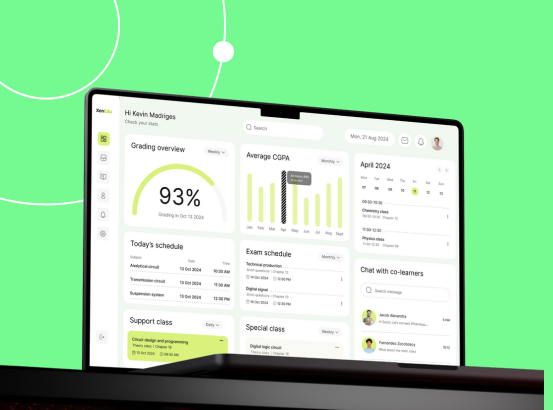
● Customer health dashboards showing retention risk and satisfaction trends
● Predictive alerts notifying teams of high-risk customers requiring intervention
● Insights reports identifying key satisfaction drivers and improvement opportunities
● ROI tracking measuring impact of retention initiatives on churn reduction
Feature Engineering
● Behavioral features (usage frequency, engagement trends, support interaction patterns)
● Sentiment features (feedback sentiment scores, sentiment trends over time)
● Service quality features (average response time, resolution rate, escalation frequency)
● Customer profile features (tenure, contract value, industry, user count)
● Temporal features (time since last interaction, days to renewal, trend direction)
Data Sources
● Customer feedback surveys (NPS, CSAT, custom surveys)
● Support ticket data (volume, type, resolution time, sentiment)
● Product usage analytics (login frequency, feature usage, engagement patterns)
● Transaction history (payment status, plan changes, renewals)
● Service quality metrics (response times, resolution rates, SLA compliance)
Machine Learning Models
● Scikit-learn for regression and classification models
● Random Forest and Gradient Boosting for retention prediction
● Logistic Regression for churn probability scoring
● Natural Language Processing (NLTK, spaCy) for text analysis
Results That Enhance Customer Loyalty
● Projected 20% increase in customer retention rates based on pilot program results
● Early intervention for at-risk customers before churn occurs
● Proactive retention campaigns triggered by ML-driven risk scores
● Reduced time-to-intervention from reactive (post-churn) to proactive (weeks before churn)
● 85% accuracy in identifying customers who will churn within 90 days
● High-risk tier precision of 78% (customers flagged as high-risk actually churn without intervention)
● Early warning 4-6 weeks before churn providing time for effective intervention
● Low false positive rate (12%) ensuring retention efforts focused on truly at-risk customers
● Identified top 5 satisfaction drivers (response time, product reliability, onboarding quality, feature requests, pricing)
● Quantified impact of each driver on retention probability
● Segmented insights understanding different drivers for different customer types
● Trend analysis tracking satisfaction evolution over customer lifecycle
● Data-driven service improvements across all customer touchpoints
● Prioritized roadmap focusing on highest-impact improvements first
● A/B testing framework measuring impact of service changes on satisfaction
● Continuous improvement loop using ongoing feedback to refine service
● Reduced average response time by 40% based on correlation with satisfaction
● Improved first-contact resolution by 25% addressing key pain point
● Enhanced onboarding process reducing early-stage churn by 30%
● Proactive outreach program for high-value customers showing early risk signals
● Identified 6 distinct customer segments with different satisfaction drivers
● Tailored experiences for each segment based on unique needs and preferences
● Personalized retention strategies targeting segment-specific pain points
● Resource optimization focusing high-touch efforts on high-value, high-risk segments
● Reduced annual churn from 22% to projected 18% (4% point improvement)
● $800K annual value from retained customers (based on average LTV)
● 5x ROI on retention initiatives vs. customer acquisition costs
● Increased customer lifetime value through longer tenure and expansion
● Focused retention efforts on truly at-risk customers vs. blanket campaigns
● Reduced support escalations through proactive issue resolution
● Better resource allocation prioritizing high-impact improvements
● Automated alerting replacing manual monitoring and analysis
● Product roadmap prioritization informed by customer feedback analysis
● Service level investments justified by retention impact data
● Pricing strategy insights understanding sensitivity and value perception
● Competitive intelligence identifying why customers consider alternatives
"The Customer Experience Intelligence platform transformed how we understand and serve our customers. We went from reacting to churn after it happened to preventing it weeks in advance. The ML-driven insights have fundamentally changed our product roadmap, service delivery, and retention strategy. This has become mission-critical to our business."
Customer Experience VP◉Scikit-learn (regression, classification)
◉Random Forest algorithms
◉Gradient Boosting machines
◉Logistic Regression
◉NLTK (sentiment analysis)
◉spaCy (text processing)
◉Topic modeling (LDA)
◉Sentiment classification
◉Python (Pandas, NumPy)
◉Feature engineering pipeline
◉Data integration (ETL)
◉Analytics database
◉Customer health dashboards
◉Predictive risk alerts
◉Insights reporting
◉ROI tracking
1. Predictive Models Enable Proactive Retention
ML-based churn prediction with 85% accuracy provides 4-6 weeks of advance warning, enabling effective intervention before customers leave.
2. Correlating Feedback with Behavior Reveals True Drivers
Analyzing feedback sentiment alongside actual customer behavior (usage, renewals) identifies what truly impacts retention vs. survey responses.
3. Service Quality Metrics Predict Satisfaction
Response time, resolution rate, and other service benchmarks strongly correlate with retention—quantifying ROI of service improvements.
4. Segmentation Reveals Different Satisfaction Drivers
Different customer segments have unique satisfaction drivers—one-size-fits-all approaches miss opportunities for targeted improvements.
5. Early Warning Systems Transform Retention Economics
Proactive intervention for at-risk customers costs 5x less than acquiring new customers while delivering higher LTV.
Customer Experience Use Cases
● Churn prediction and prevention
● Customer health scoring
● Proactive intervention campaigns
● Win-back strategies
● Service quality benchmarking
● Touchpoint experience analysis
● SLA optimization
● Resource allocation
● Feature prioritization
● Product roadmap alignment
● User experience improvements
● Pain point identification
● Onboarding optimization
● Adoption acceleration
● Expansion opportunity identification
● Account health monitoring
If your organization faces challenges with:
● Customer retention and churn requiring predictive insights
● Customer satisfaction understanding beyond basic survey scores
● Service quality optimization needing data-driven prioritization
● Proactive customer success vs. reactive support
● Customer experience measurement correlating feedback with business outcomes
hello@syloxlabs.com
+91 99980 71594
Schedule a consultation with our customer analytics specialists to explore how ML-powered insights can transform your retention and satisfaction.
Related Case Studies
This case study represents actual client implementation with details anonymized for confidentiality. Results achieved through 3-month engagement with 4 ML engineers and 2 data scientists. Projected retention improvements based on pilot program results. Individual results may vary based on specific implementation context and business requirements.